Sunday, August 10, 2008

Seattle Dominican Solemn Mass

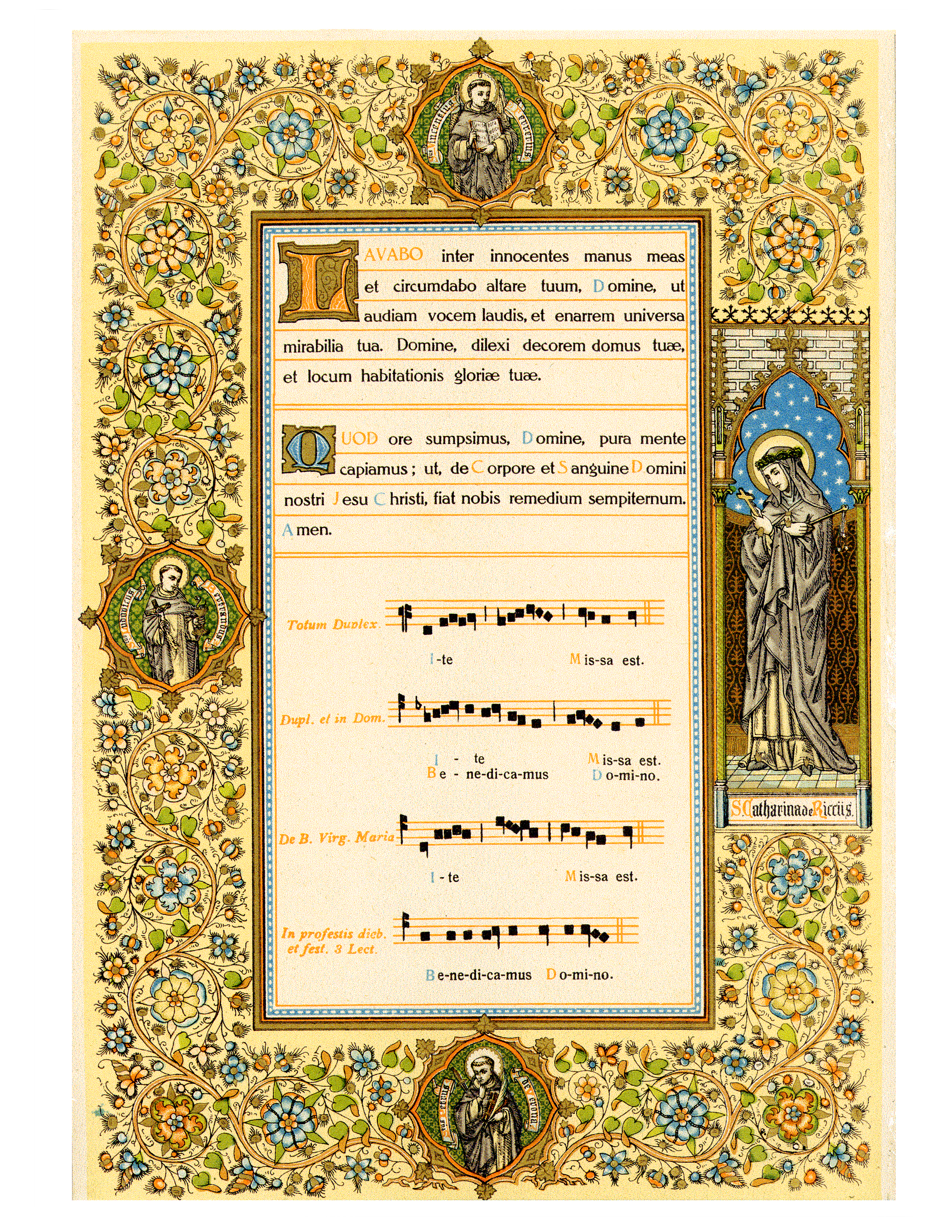
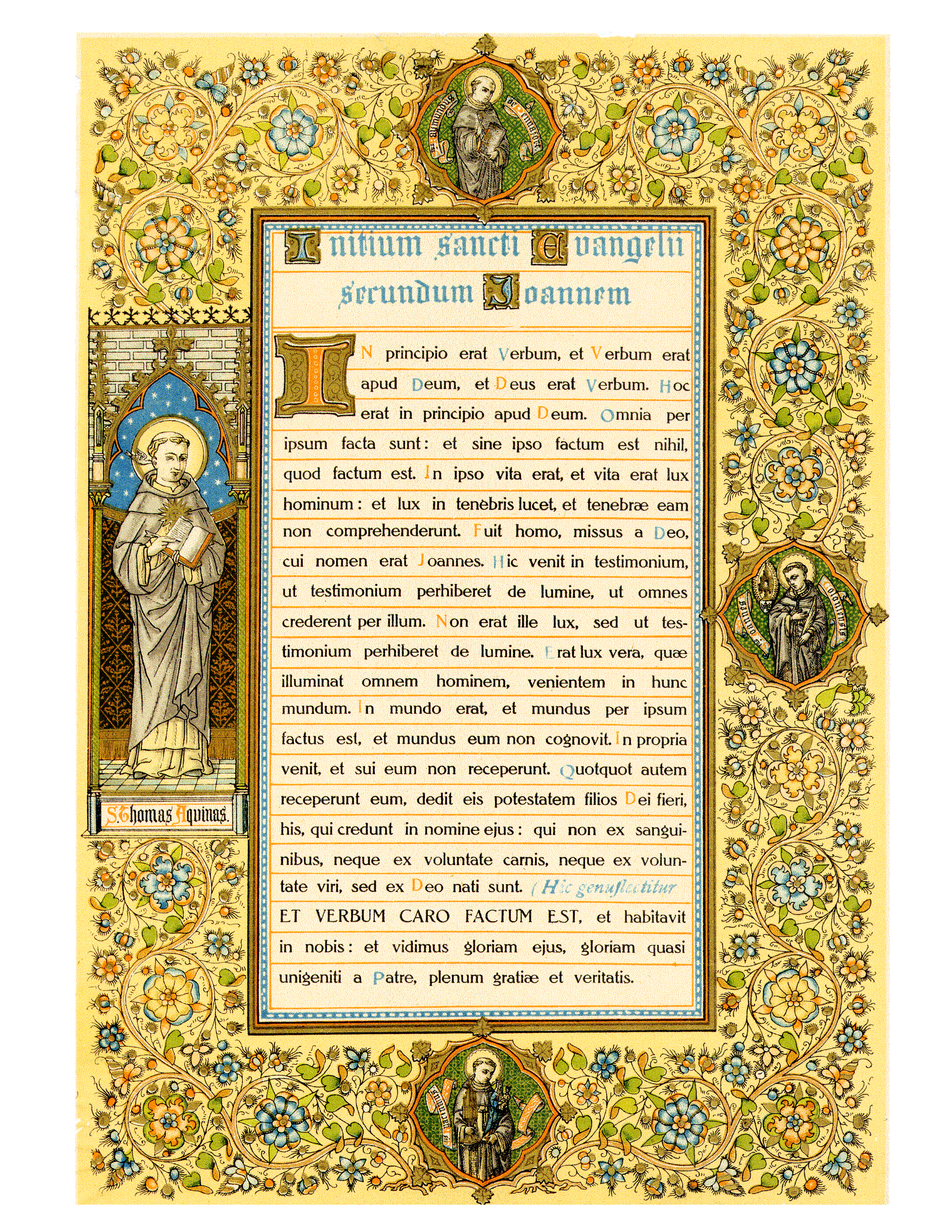
As readers know, on August 8, 2008, the Dominican Parish of the Most Blessed Sacrament in Seattle, Washington, celebrated its Centennial Anniversary with a Solemn Mass in the traditional Dominican Rite. Through the kindness of readers we now have some images of this Mass as well as a video. The celebrant was Fr. Daniel Syverstad, O.P., Pastor of Blessed Sacrament, functioning as deacon was Fr. Anthony Patalano, O.P., Pastor of Most Holy Rosary, Portland OR, and as subdeacon Fr. Augustine Thompson, O.P., S.T.M., Professor of Religious Studies and History at the University of Virginia. The Tudor Choir under the direction of Mr. Doug Fullington sang the Missa Gloriose Confessor Domini by Juan Esquivel, based on a motet by Francisco Guerrero between 1605 and 1609. The music was newly edited for this occasion. The Propers were sung from the
Dominican Gradual
.

Plans for this Mass had been going on for several months, and the response and attendance was far beyond anything that had been expected. Here follow some pictures.

Before I begin the Mass photos, here is one of the statue of Our Holy Father St. Dominic, decorated for his Feast.


The Church of the Blessed Sacrament, a neo-Gothic edifice begun in 1910 can be seen against the evening sky if the University District, which the parish serves. The spire on the tower is easily visible from Interstate Five.


Here is a view of the interior, showing the congregation. The church, which holds 700, began to fill over an hour before the Mass and there were at least another 200 standing in the aisles, transcepts, and vestibule.


Here we seen the major ministers in procession to the altar, just as they are about to pass through the communion rail into the sanctuary. They have their amice-covered capuces up, as is our practice. You can also see that the amices are decorated with an apparal to match the albs.


Here the ministers have arrived at the altar and just risen from genuflecting to the reserved Sacrament. In moment they will bow for the Confiteor and the acolytes will turn in, holding their candles.


The Confiteor finished, the ministers form a line with the acolytes flanking each other below. This is the "cross" formation, which is taken by the mnisters when they are about to swing to the side, which they will all soon do for the reading of the Officium (as we call the Introit) and Kyrie at the Epistle Side.


Below is a good view of the High Altar. The interior of the church, which was never completed, is in bare brick, but the sanctuary and side altars, and main altar are decorated with walnut wainscoting, the work of Fr. Christopher Moschini, O.P., pastor of the parish in the late 1960s. He was a skilled craftsman, and the carving and decoration are all his own work. He would have been in seventh heaven had he lived to attend this Mass. Fr. Moschini was deacon at the first Dominican Rite Solemn Mass I ever witnessed, at St. Albert the Great Priory, Oakland CA, in 1978. The six great candles, neo-Gothic to match . the church, were a donation by a parishioner in honor of the Centenary. In this view, the subdeacon can be seen completing a part of the preparation of the altar after his Procession with the Chalice during the Gloria.


The ten assisting Dominican friars were seated as in choir on the extension of the sanctuary added in the early 1970s. Here you can see the five on the Gospel Side. In the back, in a special stall in the sanctuary is Fr. Michael Sweeney, O.P., President of the Dominican School of Philosophy and Theology in Berkeley CA, which serves the Western Dominican Province House of Studies in Oakland. He was the guest preacher. In front from the left are Bro. John Marie Bingham, Bro. Augustine Marie Reisenauer, Fr. Albert Paretsky, and Fr. Thomas Kraft. They have their hoods raised as is traditional when listening to the chanting of the Epistle.


Here we see the two acolytes, the crucifer, and the turifer in formation to begin the Gospel Procession (photo previously posted). In a moment the major minsters will join them.


Here we see the deacon, Fr. Anthony Patalano, chanting the Gospel, facing liturgical north--the direction of darkness--and thus spreading the light of the Gospel. behind him is the subdeacon,while the acolytes hold candles and the crucifer the processional cross. The carrying of the cross at the Gospel is part of the Dominican Rite and reminds those present of the mystery of the Crucified Savior that the Scriptures proclaim.


Here we see Fr. Sweeney preaching. His sermon paralleled the Church of the baptized as the agency for accomplishing the unfinished Salvation of the World with the task of the Dominican Order to preach the Gospel to people who have yet to hear it, and both with the challenge to parishioners presented by the still unfinished church of the Blessed Sacrament. He charged us as baptized Catholics, Friars Preachers, and parishioners, to take responsibility for Christ's mission, each according to our state of life.


Here is another one of Fr. Michael preaching, which gives a good view fo the altar. Notice the covered chalice resting on the humeral veil. It was brought in procession to the altar by the subdeacon during the singing of the Gloria.

Here the celebrant, Fr. Daniel Syverstad, O.P., has turned to greet the congregation with the Dominus Vobiscum that introduces the Offertory. The ministers are in the "cross formation" and you can just see the deacon, Fr. Anthony-M. Patalano, O.P., lifting the front of Fr. Daniel's chasuble, something done whenever the priest raises his hands at a greeting facing the people.


Here we see the ministers in the "triangle" formation, just before the Elevation. The deacon is holding in his right hand the censer, with which he will incense during the elevation, while he holds up the back of the chasuble with his left hand. The acolytles hold their processional candles (our form of elevation torches) and the thurifer kneels between them to complete the "triangle." The subdeacon, of course, kneels quietly, holding the paten under his humeral veil.


Here we see the celebrant kissing the Pax Instrument. He has just dropped the particle in the chalice and kissed it. The deacon will then take the Pax to the subdeacon.


Here is a closer view of one of the two new Pax Instruments presented to Blessed Sacrament Parish in honor of the Anniversary. They were a gift from Fr. Anthony-M. Patalano, O.P., and Holy Rosary Parish in Portland. The instruments duplicate of those made in honor of Holy Rosary's Centennial in 1995. It shows, as you can see, the Man of Sorrows. This instrument was that used, after the Fraction to communicate the Christ's Peace from the altar to the friars. You can see this rite beginning at about 40 seconds into the next item. There the deacon presents the Pax to the subdeacon to kiss, who then presents it to the ministers. Finally, the crucifer can be seen taking it to the friars in choir.


Here the ministers have taken the flanking position for the Communion Preparation. They are just bowing over for the Confiteor. In front you can see several of the 10 friars who assisted in choir. They are postrating in the venia for the Confiteor and Ecce Agnus Dei (an addition from the Roman Rite added to our liturgy in 1959).


During the Agnus Dei we were fortunate to have a parishioner taking a video . In it you can hear the Tudor Choir chanting the Agnus Dei by Esquivel while the ministers perform their functions from the Fraction to the Communion Preparation Rite.


To give again some idea of the crowed church, here is Fr. Thomas Kraft, O.P., parochial vicar at Blessed Sacrament distributing Communion at the rail.


Here we see the deacon and subdeacon holding the water and wine cruets for the Ablutions. When the priest has consumed the these, the deacon will fold the corporal and put it in the burse, and the subdeacon will dry and remake the chalice. Then he will take it all to the sacristy.


We close with a shot of the procession leaving the sanctuary.


Thanks to Major Autem His Est Caritas, Mr. Jesson Mata, music director of Blessed Sacrament, and Mr. Pat Bucy, as parishioner there, for these photos and the video; and thanks to our reader, Mr. Lawrence Lam, who was the thurifer for the Mass, for the photo of the Pax.

Saturday, August 9, 2008

Dominican Rite on the West Coast

In a few days I hope to have reports on the Dominican Rite Solemn Mass at Blessed Sacrament Church in Seattle WA. That Mass was celebrated yesterday as part of the festivities of the Centennial Anniversary of the parish. The attendance was a great surprise and delight to all. There were nearly 900 people in attendance in a church that can hold just under 700. The pews had began to fill an hour before the service. The polyphony and Dominican chant by the Tudor Choir was spectacular and the sermon by Fr. Michael Sweeney, O.P., President of the Western Dominican School of Philosophy and Theology in Berkeley, serving our House of Studies, was not only theologically profound but witty and challenging. This Mass was not only the first time that the pastor, Fr. Daniel Syverstad, O.P., had celebrated the Dominican Solemn Mass, it was also his first public celebration in Latin--he had been preparing for over two months. I have reason to believe will not be his last.

Since I am still waiting for pictures from the photographers at Seattle, I thought I would take the opportunity to share two images from the first Dominican Rite Mass in nearly 40 years at the Monastery of Our Lady of the Angels, home of the Dominican cloistered nuns in Hollywood, Los Angeles. This Low Mass was celebrated for the sisters on Saturday, August 2, by Fr. Anthony-M. Patalano, O.P., pastor of Holy Rosary Church in Portland. He was served by Fr. LaSalle Sean Hallissey, O.P., prior of St. Dominic's Priory in Eagle Rock, Los Angeles, who wears an "Old English" surplice that was a special gift to him. In the image to the above left, you can see Fr. LaSalle ministering the water and wine at the preparation of the chalice, which in our Low Mass comes before the Prayers at the Foot of the Altar. As you can see, Fr. Anthony still has his amice-covered capuce raised. He will lower it just before the prayers. Through the nun's choir screen in Art Deco style (the monastery was built in the 1930s) you can see three of the nuns. The wooden screen panels can be seen to the left: they have been opened for the celebration of Mass as has always been the custom. Our Domincian Nuns practice Perpetual Adoration of the Blessed Sacrament, and you can see the shade covering the monstrance in the center above the opening to the choir. The cover is removed outside of Mass times.

In the second photo to the right you can see Fr. Anthony elevating the Host, with Fr. LaSalle ringing the bell and lifting his chasuble. The top of the nun's screen is visible behind the altar. That monastery altar has always been free-standing, with the nuns behind it and a small nave for lay people before it.

I would like to thank those who attended the Seattle Mass who have, over the last twenty-four hours, sent me numerous emails or posted comments expressing appreciation of the liturgy and the music.

Tomorrow morning at 11 a.m. here at Holy Rosary Church in Portland I will serve as deacon for the second Dominican Rite Solemn Mass this week. Celebrant will be Fr. Patalano, and serving in the role of subdeacon will be Bro. John-Marie Bingham, O.P., a student from our House of Studies. If any readers are present, please introduce yourselves!

Tuesday, August 5, 2008

Dominican Rite in the Northwest


Those readers in the Northwest way be interested to know that there will be two Dominican Rite Solemn Masses this week.

At Blessed Sacrament Church in Seattle WA (photo to the right) on Friday, August 8, 2008, at 7:00 p.m. in the church Mass will be sung in to celebrate of the Centennial of the Parish. The music, to be sung by the Tudor Choir, will be: for the ordinary, Missa Gloriose Confessor Domini by Juan Esquivel, with the propers from the Dominican Gradual. The celebrant will be Fr. Daniel Syverstad, O.P, past Prior Provincial and current pastor.


Then at Most Holy Rosary Church in Portland OR (photo to right), on Sunday, August 10, at 11:oo a.m. in the church, Cantores in Ecclesia, under the direction of Mr. Dean Applegate will sing the Mass of St. Dominic in plainchant, according to the Dominican Gradual. The celebrant will be Fr. Anthony-M. Patalano, O.P., pastor.

If any of our readers are present at either Mass, please feel free to introduce yourselves. I will be present at both Masses.

Wednesday, July 30, 2008

Dominican Rite Solemn Mass, Holy Rosary Church, Portland OR (1996)

Thanks to the New Liturgical Movement, we can now present these stills from the DVD of the Mass for the Centennial of Holy Rosary Church and Priory in Portland, Oregon. If you like these images, you can order the DVD from the Rosary Center in Portland, Oregon. Just follow the link, click the tab for Audio/Video, and find "Dominican Rite Solemn Mass." You may select DVD or VHS format.

This Dominican Rite Solemn Mass was celebrated on January 28, 1995 in the presence of the then archbishop of Portland and now Cardinal Prefect of the Sacred Congregation for the Faith, William J. Levada. He presided in choro in accordance with practices of the Dominican Rite. These are far less complex than those for the traditional Roman Rite. He gave the absolution during the Prayers of at the Foot of the Altar, kissed the Gospel Book after the priest and deacon, was incensed after the ministers and servers but before the friars present, likewise kissed the pax instrument, and, finally received a head bow before the celebrant gave the final blessing.

For this Mass, the priest was the V. Rev. Fr. Anthony Patalano, O.P., then prior and pastor of Holy Rosary, who is currently again pastor there; the deacon was Fr. Paul Raftery, O.P., now chaplain at St. Thomas Aquinas College in Santa Paula CA; the subdeacon was Fr. Augustine Thompson, O.P., now professor at the University of Virginia and editor of this blog. Cantores in Ecclesia, under the direction of Mr. Dean Applegate, who continues to direct the choir for the 11:00 a.m. Sunday Mass at Holy Rosary. provided the music. Although they are not a professional music group, this choir is nationally known and they have CDs available. Holy Rosary Church had undergone, under the direction of Fr. Patalano, a major restoration in preparation for the centennial. One can see the repristinated side altars, the niche for the baptismal font at the left, and the new monumental tabernacle behind the free-standing altar. This marble altar was that of the original St. Dominic's Church in San Francisco, which collapsed in the earthquake of 1906. It can be used for both celebration ad orientem as well as ad populum. The altar rail and side altars were also refinished for the event, and new stained glass windows, showing the Fifteen Mysteries of the Rosary were installed, replacing the original plain white glass.

After the three major ministers you can see Archbishop Leveda, accompanied by his chaplain of honor, Fr. Edmond Ryan, O.P., former prior and pastor of Holy Rosary. Before the major ministers, you can see the friars present for the event, wearing their black cappas. As the sanctuary of Holy Rosary (a converted nineteenth-century gymnasium) is very small, they were seated in the front pew. Yes, the church was full, and parishioners were even standing in the vestibule and on the steps outside.

The major ministers have their amice-covered capuces up. This parallels the Roman practice of wearing the biretta to the altar (as can be seen on the archbishop). The amices, in a medieval style, have an embroidered decoration called an "apparal." A similar apparal decorates their albs, at the bottom and on each of the sleeves.


This next image shows the ministers bowing to recite the Confiteor during the Prayers at the Foot of the Altar. The new stained glass windows showing St. Dominic and St. Catherine (just then named a Doctor of the Church) are visible above. The two acolytes, still holding their candles, have turned toward each other for the prayers. The Dominican Prayers at the Foot of the Altar are very brief, as was typical of the thirteenth century practice. A verse and response, the Confiteor, and another verse and response. The ministers then ascend to the altar, the deacon and subdeacon placing the lectionary and missal, which they have carried, in their proper places.


After the Prayers and the Foot of the Altar, as the choir sings the Officium (as we call the Introit) and the Kyrie, it is usual for the ministers to sit. They return to the altar for the priest to intone the Gloria. In the Dominican Solemn Mass, as in the Sarum Rite and other northern uses, there is a procession with the gifts during the Gloria. The subdeacon carries the chalice with paten and host, and his acolyte carries the water and wine cruets. In this next image we see the subdeacon placing the chalice on the altar. He has carried them covered with the ends of the humeral veil, which he still wears.


The Gloria finished, the ministers return to the altar and, after the Dominus vobiscum, swing to the side for the singing of the Collect. This swing, and others like it later in the Mass, is one of the most famous aspects of the Dominican Mass. Here the priest, deacon, subdeacon, senior acolyte, and junior acolyte form the "wing position" as the priest sings the Collect:


The Collect finished, the subdeacon sings the Epistle. During the Epistle, the deacon ascends to the altar to lay out the corporal. This type of simultaneous action by the ministers is typical of our rite. As the Mass is celebrated above all to worship God, and he is not comfused by several actions happening simultaneously. There is no need to have each minister wait for the anothers to finish their functions before he can perform his own, as if they were each "performing," not for God, but for some human "audience." In this image we see the unfolding of the corporal by the deacon, Fr. Paul Raftery:


As the deacon is laying out the corporal, and the subdeacon is singing the Epistle, the server has taken the missal over to the sedilla for the priest to read Epistle, Responsorium (as we call the Gradual), the Alleluia, and the Gospel. At the time of Humbert of Romans' standardization of our Rite (1256), only the Responsorium and Alleluia were read by the priest: after all he was unable to join in the chants because (as at the Kyrie and Gloria) he had other things to do. He did not at that time read the Epistle or Gospel, as these were proper to the other ministers. In the early modern period, when the predominance of Low Mass in the Roman Rite caused people to think that the priest had to do everything to "make it valid," we adopted this Romanization and had the priest read the Epistle and Gospel as well. This practice was abolished only in 1964, so in this Mass, using the rubrics of the Rite was they were in 1962, the priest still reads the readings as well as the chant. In the next image, where he is reading the Responsorium, you can see that the Mass of St. Thomas Aquinas is being celebrated. The missal used is that of 1933, with its famous neo-gothic engravings.


In the next image you can see the ministers and acolytes gathered at the sedilla as the priest reads the Gospel quietly. So all are standing. At this point he choir is still singing the Responsorium.


The subdeacon then receives the humeral veil and takes the chalice from the altar. He goes to the sedilla for his Preparation of the Chalice under the direction of the priest. This next image shows him doing his as the deacon holds the paten and host, and the priest indicates how much wine and water to add.


Here the subdeacon returns the chalice to the altar. You can see the archbishop's chaplain of honor, Fr. Ryan, sitting in the apse behind the altar.


This image shows Fr. Patalano about the incense the altar at the Offertory. He has just received the censer. After incensing the altar, the deacon will incense him. The other ministers are incensed during the chanting of the Preface.


In this picture taken during the Canon we see the ministers in the triangle formation, just about to kneel for the Consecration of the Host and Chalice. The archbishop and his chaplain have already knelt. The two acolytes hold their processional candles -- our version of elevation torches -- and the censer-bearer stands between them, ready to pass the censer to the deacon.


In this photo the ministers have knelt for the Consecration. You can see the lighted Sanctus candles on each side of the altar, next to the outer most of the six large ones. The apparalled amices worn by the priest and deacon are quite visible here, but the subdeacon's is covered by his humeral veil because he is holding the paten.


The deacon raises the chasuble and incenses the Precious Blood during the Elevation of the Chalice.

After the fraction, the priest drops a particle of the Host into the chalice and kisses it. The deacon then presents him with the Pax Instrument, which he kisses. The deacon then takes it to the subdeacon to kiss, who then presents it to the minor ministers. The cross-bearer than took to the archbishop and then to the friars. In this photo we can see him giving the peace to Fr. Bartholowew de la Torre, now a missionary in Baja California. Fr. Dominic Hoffman (R.I.P.), a prolific writer of spiritual books, kneels to the left. The "Pax Brede" being used was the subject of a recent post on this site.

In this photograph se we see the praparation for the Communion of the People. The mnisters have knelt in preparation for the priest to turn and display the host for the recitation of the Domine non sum dignus. The Dominican Rite adopted this Roman practice in 1959. Previously we simply recited our version of the Confiteor at this point.


In this final image you can see the the ministers as they about to genuflect and leave in procession. You can see that their capuces are up and that the archbishop and his chaplain have already begun singing the recessional hymn.

If you liked these images, do remember that you can order your own copy of the DVD from the Rosary Center.

Monday, July 28, 2008

The Pax Instrument at Dominican Mass

Fr. Anthony Patalano, O.P., pastor of Holy Rosary Church in Portland has sent me pictures of one of the Pax Instruments (instrumenta pacis), or "Pax-bredes" that were cast on the celebration of the Centennial of the church in 1994. As many readers have probably never seen this instrument, he suggested a posting on it. Before I leave for the north in a couple of days, here it is.

The Pax Instrument (as we Dominicans call it), Osculatorium Pacis, Pax-Brede, or Pax-Board, is often simply referred to as the "Pax." It seems to have been introduced in Western Liturgy in the early thirteenth century. It has been a part of the Dominican Rite liturgy at least since the time of Humbert's Reform (1256). Instruments of ivory, wood, silver (as here) or other metals exist. As you can see in the image to the right that of Holy Rosary shows on the front Our Savior crowned with thorns in the traditional image of the Man of Sorrows or Ecce Homo. This is one of the common images for a Pax. Other possible images are an Agnus Dei or the Crucifixion. I know of one where the image is of Our Lady. There is no obligatory image and it might even be a simple cross. The back of the instrument has a handle so that it can be presented for kissing. You can see the handle on the back of the Portland Pax, which includes a commemorative inscription, in the second picture.

Use of the Instrument. In the Dominican Mass, the Pax instrument is used at all Masses of Simplex (or in 1962 terminology "Third Class") feasts and above. After the priest has dropped the particle into the chalice, which in our rite is done immediately after the recitation of the Agnus Dei, the priest recites the mingling formula and kisses the chalice. The deacon approaches on the priest's right, takes up the instrument, and presents it to the priest to kiss. He then kisses the instrument himself and descends to the subdeacon. He presents it for him to kiss, saying Pax tibi et Ecclesiae Dei sanctae. He then gives him the instrument so that he can perform the same rite for the two acolytes. The subdeacon then returns the instrument to the altar placing it on the Epistle side of the corporal, that is, unless the peace is to be given all the friars present in choir, which is done on Sundays and on First Class Feasts (totum duplex). If that is to be done, the subdeacon presents it to the two acolytes to receive and then takes it to the lead cantor who presents it to the friars in choir, beginning with the Master of the Order (if present), then the prior provincial (if present), next the local prior, and finally the brothers in order of religion. He then places it on the credence. If it is not convenient for the subdeacon to go to the choir, this task may be undertaken by the crucifer, who comes up to receive the pax after the acolytes. On the very highest of feasts, however, the subdeacon himself takes the pax to all the friars in order, accompanied by his acolyte.

If the community has no pax instrument, the paten may be used in its place, but, in that case, it is not customary to have it carried to the community in choir. If a bishop is presiding in choir, he would receive the peace after the ministers but before it is presented to any of the friars in choir. There is an interesting local variant of this ritual in some places at Low Mass. It is not observed in the United States, and never was, as far as I know, at least in the Western Province. In this custom, the server at Low Mass, when he sees the priest kiss the chalice at the mingling, ascends and picks up the paten with the purificator and offers it to the priest to kiss. The priest then greets the server with Pax tibi et Ecclesiae Dei sanctae, the server himself kisses the paten and replaces it on the altar. I understand that this ritual is still observed among the Australian Dominicans.

Through the kindness of one of our readers, a former parishioner at Blessed Sacrament Church in Seattle, I can now add two more images of a Pax Instrument, these made in France. Notice that this one shows the Agnus Dei.


Thursday, July 10, 2008

Landmark: 10,000 Visits to Dominican Liturgy

Even if you read this site regularly, you may have never gone all the way to the bottom of the page. If you do, you will find a little graphic showing a number there. This number lists the number of times Dominican Liturgy has been visited by readers. Some time last night (July 9) the number passed 10,000. So I had to reconfigure the four-digit counter to make it show the current total. Now, 10,000 visits in two months may not be much for some of the big-time Catholic blogs but for the little world of Dominican Liturgy, this was a landmark. It is times like this when the work seems worthwhile and productive. If you have friends interested in the Dominican Rite or music, do let them know about this site. Should you have questions or comments, leave them in the combox of this welcome page and I will be notified. Or contact me directly by email.

I would like to remind readers of the new additions to our sidebar for books of Dominican chant and liturgy. These are all downloadable as pdf files. I will continue to update the Liturgy of the Hours Vesperal in Dominican Chant as I complete more sections. I am now adding the Commons. You will notice that there are some missing antiphons. Since I am following the Ordo Cantus Officii (1983) from the Sacred Congrgation for Worship and some of the antiphons prescribed are not edited, these will come as soon as I can transcribe them from mircofilms of manuscripts. This should be possible after I get back to the D.C. area in the fall and can use the chant microfilms at Catholic University. But for now, there is plenty of material for those who want to sing Vespers in Latin chant using (mostly) Dominican melodies.

Saturday, July 5, 2008

The Venia and Kissing the Scapular

I have been asked by readers to say something about Dominican traditions concerning the practice of making the venia and the custom of kissing the scapular. I am happy to oblige. What follows respresents formal legislation or custom within my own province. I am sure that others will let us know about different practices elsewhere.


The Venia is made (Caeremoniale (1869), n. 791), "by extending the whole body on the ground, not on the stomach but on the right side, with the left leg on top of the right." Although the exact posture varies a bit from province to province, and even according to what a friar was taught by his novice master (one of whose responsibilities is to "teach the novices to make the venia"), this image of a French friar of Toulouse is a good example.

Traditionally, the venia is made for one of two reasons: to show acceptance of an obedience or to ask forgiveness. It is similar to the practice in certain religious congregations of kissing the ground, a custom we do not use. The Caeremoniale prescribes the following times when it is made to accept a obedience:

1. At a chapter of faults on receiving a penance.
2. After correction by a superior.
3. On receiving a precept, office, or ministry.

This last is probably the most common use in practice today. I have seen the venia done during the past year by a friar after the reading of the "mandamus" assigning him to our priory in Oakland, and a couple of years ago on the installation of a prior there.

More common historically, is the use of the venia in asking forgiveness or showing sorrow for a fault. The Caeremoniale prescribes it on these occasions:

1. At a chapter of faults, on making a self-accusation.
2. When asking forgiveness for a fault from a superior, or even from other simple friar.
3. By the communicants (not the ministers) at the recitation of the Confiteor before Communion in the Dominican Rite Solemn Mass up to 1959, when this Confiteor was dropped to conform to changes in the Roman Rite.
4. In the sacristy, by the server after Mass, if he has made a mistake in serving.
5. During reading at meals, at the end of the reading, if a grave mistake were made (e.g. one causing laughter).
6. In choir, if one arrived very late (after the first Psalm of the Office), in which case one remained on the floor till the prior knocked on the form. Or, by a chanter or reader, after making a grave mistake in singing or reading. This venia was done briefly, rising without waiting for the prior to knock.
7. In Sacramental Confession, when using the Dominican Rite formula for absolution, if the friar penitent recited the Confiteor after the absolution from censures and before the priest recited the Misereatur and gave formal absolution. Friars could do this, just as everyone recites and act of contrition today in confession, but lay people were not expected to know the formula in Latin, so it could be omitted. For the form of Absolution in the Dominican Rite. see the downloadable text on sidebar to your left.

There were two other occasions when the Venia was made that do not quite fit in these categories. These were:

1. Before the superior, when leaving a community for more than one night, or when receiving the blessing for travelers.
2. During the reading of Martyrology on the feast of the Annunciation at the words "et factus homo."

When a subject had committed a very grave fault, and wanted to ask the superior for mercy, a more solemn form of the venia was made: prostration flat on the floor with arms out-stretched in the form of a cross. I have never seen this done, nor, thank God, had to do it.

Kissing the Scapular

The scapular is the apron-like part of the Dominican habit. It is a very ancient as a part of monastic garb, being mentioned in chapter 15 of the Rule of Benedict as an item worn for manual labor. Originally short, it was lengthened in the early middle ages and sometimes connected by strips at the sides to make it cross shaped, as can been seen in the example of the famous Carthusian habit to the right. Originally not worn in choir, it had became a part of the choir habit for monks, hermits, and canons regular by the 1100s. We Dominicans wear it because we are in origin canons regular, having been approved as such in our foundation bull of Pope Honorius III in 1216.

It is the only part of our habit that is formally blessed at the profession of first vows. Older legendaries claimed the the scapular was added to our habit many years after the foundation because of a apparition of the Blessed Virgin to Bl. Reginald of Orleans during a serious illness, she saying "behold the habit of your Order." This story does not indicate that the Virgin was adding the scapular to the original canons' habit of the order. As canons regular, we already had the scapular--although the late legend interpreters did not know this. Thus the unfounded story. When Our Lady showed him the scapular, it was already part of the full habit of the Order he was to enter after being healed.

The practice of kissing the scapular is customary and was never a part of our legislation in a formal way. It was, and is, the custom in many provinces to kiss the scapular in choir after making a minor mistake in singing or reading, or when having to go around another friar to get to one's stall. But this was not universal custom. In some provinces (cf. Caeremoniale, n. 797, f.n. 1) it seems that the practice was to touch the ground with a finger, or at least (for the less able) to try to do so. I have never seen that done, but in all the provinces I have visited, including my own, the practice of kissing the scapular in choir is very much alive.

Those who would like information on the lay devotion of small scapulars and their origin and use, should consult the excellent article "Scapulars" in the New Catholic Encyclopedia (1967), 12:114, by Fr. Paul N. Zammit, O.P. This is not the Catholic Encyclopedia on-line, which is the old one of 1911.

Tuesday, June 10, 2008

Dominican Use of the Capuce

This post is at the request of a commentor who wanted more information about choir rubrics and the capuce (habit hood) in the Dominican rite.

Historically men have worn hats, or at least they did until John F. Kennedy made going bareheaded fashionable, and the Capuce is the "hat" of the Dominican habit. The capuce is one of the three parts of the white Dominican habit and has a short shoulder cape attached to it. It is worn over the scapular, which is wore over the tunic. There is also a black version, which is worn over the white one when the cappa (a long black cape) is worn. The raising and lowering of the capuce is analogus to the lay practice of doffing one's hat, and to the parallel use by secular clergy of the biretta. The capuce is the only head-covering used by Dominican friars, with the exception of the doctoral biretta worn by those with ecclesiastical academic titles. And those birettas are never used in liturgical functions. Of course, this rule did not prevent wearing of a black zuchetto to cover the tonsure or, today, baldness. Well, at least that is the theory, and perhaps it was so in the Middle Ages. Photographs of friars working outside in habit under the sun, wearing wide staw hats, can be found from the 1800s in our province archives. And I have seen plenty of pictures of friars from my province at the Angelicum in Rome, some as recent as the 1980s, showing them wearing the cappello romano, the broad-brimmed Roman clergy hat. To the above right is a photo of some Angelicum students in the early 1950s on an excusion in the country outside of Rome, with their "Roman hats."

Today the use of the capuce in choir depends on local custom (and climate), but the one case where it is always kept raised is during vestition, when the capuce remains raised from the clothing until the provincial greets each new novice with the Kiss of Peace, something always part of our vestition ceremony. In the image to the right, you can see four of our Western Province novices in 2001 just after clothing with their capuces up.

Before discussing the raising and lowering of the capuce in the traditional rite, a couple of general observations are in order. First, although the practice was never completely uniform (cf. Caeremoniale S.O.P. (1869), n. 536), the practice was, and is, for non-priest friars to remove the capuce before putting on the surplice and then put it back on so that the shoulder cape is on top. Priest friars wear the surplice over the capuce and shoulder cape, so only the hood is visible. The practice with the alb and amice has changed over the years. In the Ordinary of Humbert (1256), the capuce was removed before putting on the amice and alb. Although this was later changed, many friars, to this day persist in removing the capuce before vesting with the alb, a practice regularly reprobated by liturgists of the Order into the 1960s. The problem is that the shoulder cape tends to bunch up under the amice and alb. To prevent such unsightly bumps, the deacon and subdeacon were to help the priest vest and then help each other vest (Caeremon., n. 808).

Now on to the rubrics for the use of the capuce. Traditionally men wore hats or head-covering, and the capuce is the head-covering of the habit. So, it was a general rule that when friars went out in public, they were to have the capuce up, just as laymen wore hats. And so one can see in the wood-cut to the right showing St. Dominic traveling. (You can also note that he has taken off his shoes and hose to prevent wear and tear on them as he walked along; he has them in a bundle on a stick over his shoulder). The covering of the head by the capuce was also assumed to be the norm in the monastery, although this seems not to have been universally practiced. It was, however, a rule to drop the capuce in public when preaching, and when passing before a monumental image of Christ Crucified, the Blessed Virgin, or one of the saints. A number of older friars in my province remember this practice of lowering the capuce when they passed the statute-shrines of the Dominican saints that face each stairwell of the our House of Studies in Oakland. And, of course, if the Blessed Sacrament passed on the way to the sick, or was carried in procession, the capuce was lowered. By custom, it was also lowered as a mark of respect generally, as men doffed their hats.

When the ceremonial spoke of use of the capuce at Office and Mass (nn. 378ff.), it was assumed that it was usually up, so the rubrics merely list the times when it is lowered. At Office the capuce was lowered: 1. at the beginning of each hour until the completion of the Gloria Patri (which means, at Compline, also during the short chapter and the Confiteor). 2. At the Magnificat, Benedictus, and Nunc Dimmittis. 3. At the Preces with its verses and Pater Noster. 4. At the Collects (at which the friars also bow). And finally, during the Salve Regina until the end of the devotions attached to Compline.

The capuce was lowered when the friars knelt or did the prostration on the forms (except for the prostrations before and after the Consecration). See my previous posting on Prostration on the Forms for this. These lowerings included the recitation of the Litanies kneeling, for example, and blessings at table. The capuce was lowered whenever a genuflexion was made, except for the major ministers coming to the altar at Mass, who genuflected to the Blessed Sacrament with it up (probably because the deacon and subdeacon are carrying the lectionary and sacramentary). This same rule of lowered capuce also applied to the cantors singing verses or entoning chants in medio chori. Here is a picture of office at St. Albert's Priory in Oakland in the late 1950s. The friars in choir have their capuces up, the cantors in medio chori have them down. The position of the cantors shows that the friars are probably singing one of the responsories, and the presence of two (as opposed to one or four) cantors indicates that the day is duplex feast, not a ferial or totum duplex.

The major ministers did not follow the choir rubrics for the capuce during Mass: they kept their heads uncovered from arrival until the recessional. During Mass, honwever, the friars in choir kept the capuce up, except for: 1. The priest's intoning of the Gloria; 2. The singing of the Gospel; and 3. The Elevation proper.
I suspect that most of these practices have very close parallels in the other western rites, as well as the Roman itself.

Upcoming Dominican Rite Masses

I would like to take this opportunity to remind readers that this coming August, 2008, there will be two Sung Dominican Rite Masses in the Northwest. The first, a Solemn High Mass of St. Dominic on August 8, will honor the 100th Anniversary of Blessed Sacrament Parish in Seattle. It will be at 7 p.m. in the church, and the celebrant will be Fr. Daniel Syverstad, O.P., former provincial of the Western Province and current pastor there. Then, two days later, on Sunday, August 10, at 11:30 a.m, a Mass for the transferred celebration of St. Dominic will be sung at Holy Rosary Parish in Portland. The celebrant will be the pastor, Fr. Anthony Patalano, O.P. This is currently planned as a Missa Cantata, not a Solemn Mass. I expect to be at both celebrations; if you are a reader and present, please introduce yourself.

Thursday, June 5, 2008

Ways of Singing the Salve Regina

A recent comment in the section of this blog that concerns how to sing Dominican Chant raised a good point that is worth commenting on in the public venue. The author is obviously a friar or was once in formation in a Dominican commuity. Here is the coment:

Re. the Salve Regina not being sung by alternate choirs, I was once told that there was a time when this was done, and one of the brothers I knew (now dead) used to sing it that way while everyone else used to sing it all together. I don't recall who told me about the old way.

In fact, that is how it is usually sung at the Angelicum in Rome. There seem to have been diverse traditions on how to sing this antiphon. For example, the 1933 Gillet Antiphonal, p. 133 (reproduced in the original posting), indicates that the Antiphon is to be sung straight through, because there are only single bars. But the 1949 Suarez Processional, p. 90, shows the double bars indicating the alternation between the semi-choirs. The same use of double bars is found in the 1863 Jandel Antiphonal, vol. 1, p. 138, as in the earlier 1909 Cormier Processional, p. 89. But the edition of our music found in the Jandel Antiphonal is very untrustworthy and seems to have been heavily influcenced by Roman practice and represents what was going on in the early modern period in our chant.

Perhaps the best place text to consult on this (which is easily available) is the electronic text of the 14th-century Dominican Poissy Antiphonal at LaTrobe Univ. in Australia. It shows medieval practice and is a "certified" MS--that means that was approved as matching the Humbert exemplar. It has no double bars in the text and, in fact, uses quarter and half bars where the modern books have the double or single bars. So it supports the 1933 Antiphonal, something that does not surprise me as that book was carefully corrected against the medieval music.

I might also add that the version of the O Lumen in the Antiphonal and the Processionals does not match that in that in the Compline books! The Compline books do not have a quater bar after the "men" of Lumen--so there should be no holding of that clivis. And, in fact, the tune found in the Compline books seems to be the more common one in current Dominican use. Probably because most friars learned to sing the O Lumen using the Completorium. This is not a trivial matter: at the Angelicum there is a perpetual war over whether hold that clivis: about half the community does and half does not. This clash used to drive me nuts.

Is there a "correct way" to sing the Salve? Probably not. As in so many matters there seem to be local traditions. My opinion, for what it is worth, is that the Gillet Antiphonal is to be preferred because it matches the medieval text. The alternating between choirs for this Antiphon (and for the O Lumen) probably reflects a Romanization of the way of executing the chant introduced in the early modern period, something that the Gillet Antiphonal was removing. For me, it also makes more sense to sing straight though: these texts are antiphons, not hymns or responsories. But then I am probably influenced by the practice of was formed in. The same is the case for the hold on the clivis in the O Lumen. I dislike it, not so much because I don't find it in Poissy, but because that is how I learned to sing it. I might add that the Mass ordinary is sometimes sung with alternations in ways that don't match the 1950 Gradual either. Sigh.

I can sympathize with those older friars who didn't like the change. This things seem so minor -- unless you are singing the pieces very day and suddenly find yourself in a house that does it differently. Then you understand why Humbert was commissioned to standardize the Office.