Monday, March 9, 2020

Dominican Rite Absolution Cards Available

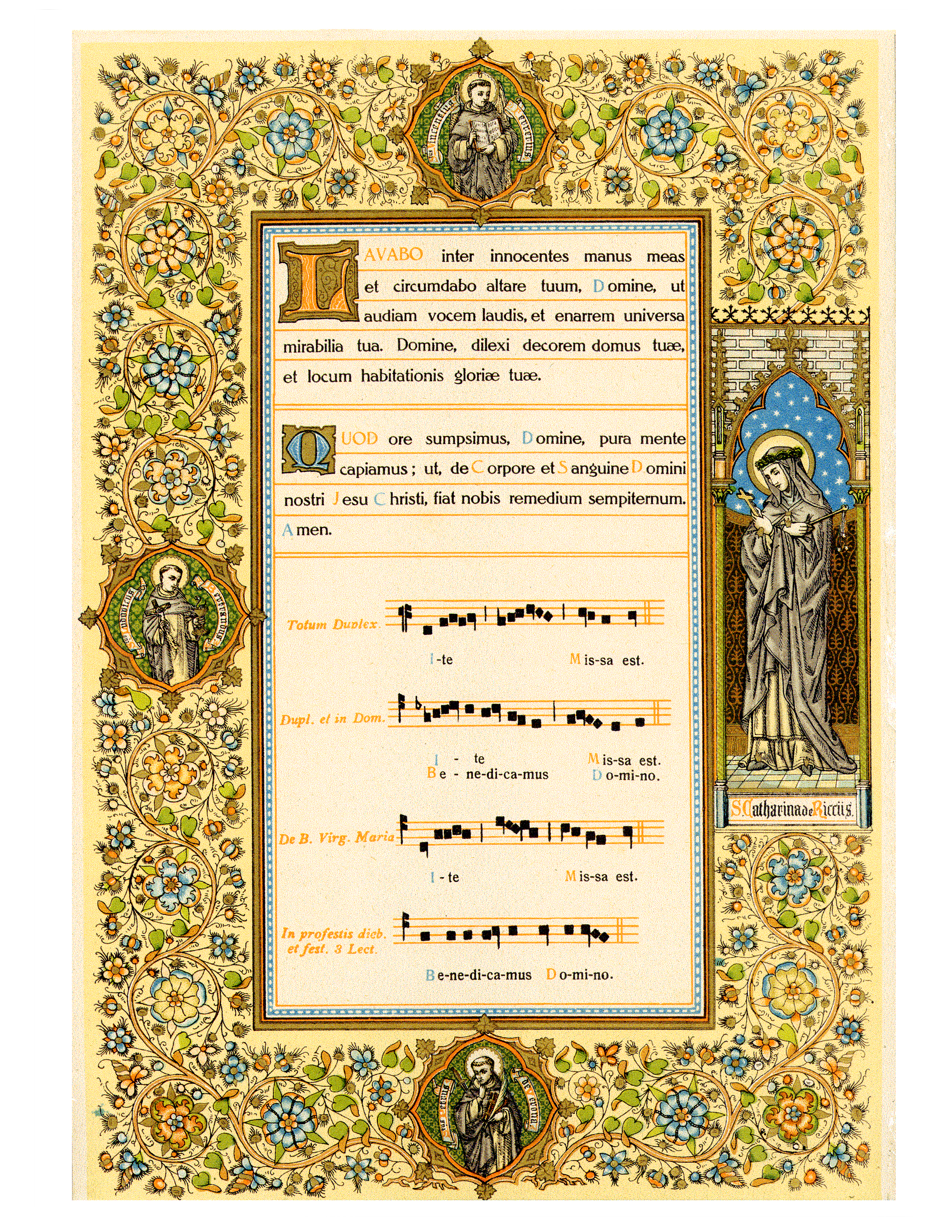
A couple weeks again a Dominican priest from another province who regularly hears confessions at a local Extraordinary Form parish told me that he did not now that there was a Dominican form for the absolution in the Sacrament of Confession and Reconciliation.  I gave him one of the wallet cards that I made up for this a few years ago.  I still have about a dozen of these cards available.

If you are a Dominican priest (or transitional deacon) and would like one of these cards, please mail a stamped self-addressed envelope to me at my St. Albert the Great Priory, Oakland CA, address and I will use it to drop a plastic-laminated card to you in the mail.  If you are a Dominican brother (or any other interested person) do the same, indicating you are not a priest or deacon, and I will mail you an un-laminated copy.

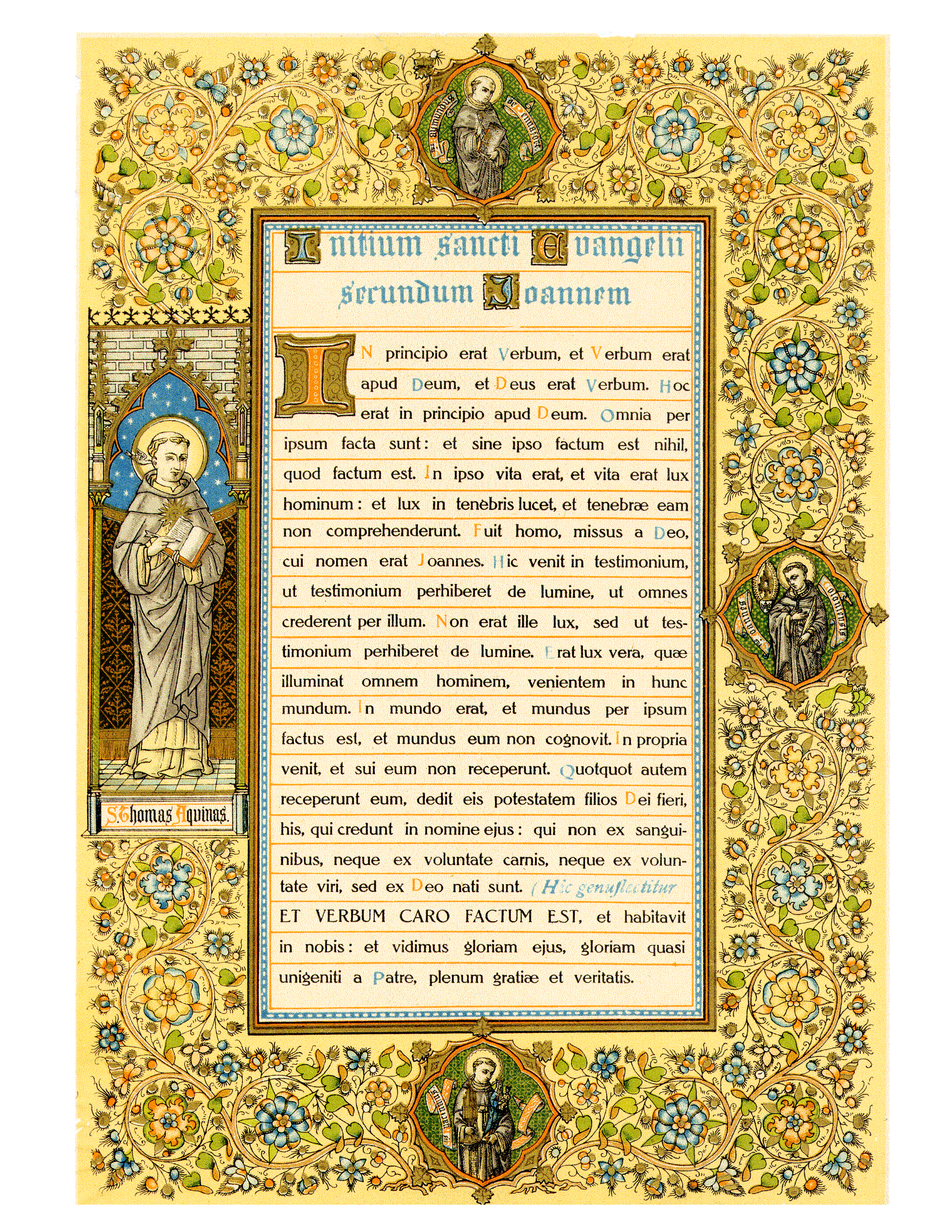
For those interested in the Dominican Rite absolution as it compares to the Extraordinary Form Roman, I have prepared a Latin and an English parallel comparison below.  I might point out some interesting differences.   The Dominican form pronounces (if needed), the absolution from censures before hearing the confession. This reflects the logic that censures need to be removed before a sacrament can be received.  The Roman simply combines this absolution with the the absolution from sins.  The Dominican absolution from sins places the rite in an ecclesiastical and sacramental context, restoring the penitent to the "communion and union" of the Faithful.  It also has an eschatological component as it references not only this earthly existence but also the soul's presence before the divine throne in heaven.  The Roman, omitting the part on censures, is very concise.

The are also a couple interesting, although less striking, differences. The Dominican absolution is given with a triple Sign of the Cross, something reserved to bishops in the Roman liturgy. And the closing prayer, optional in both, adds reference to the penitent's future intentions and St. Dominic to the simpler Roman form. Finally, the optional prayers for Divine Mercy that come after an expression of sorrow, both taken from the Prayers at the Foot of the Altar, each reflect the form of the these take in each respective rite.

Here is the Latin:

Here is the English version:


I hope that readers who do not hear confessions will find this comparison of interest.

Photo Post: The Old Rite in a New Place

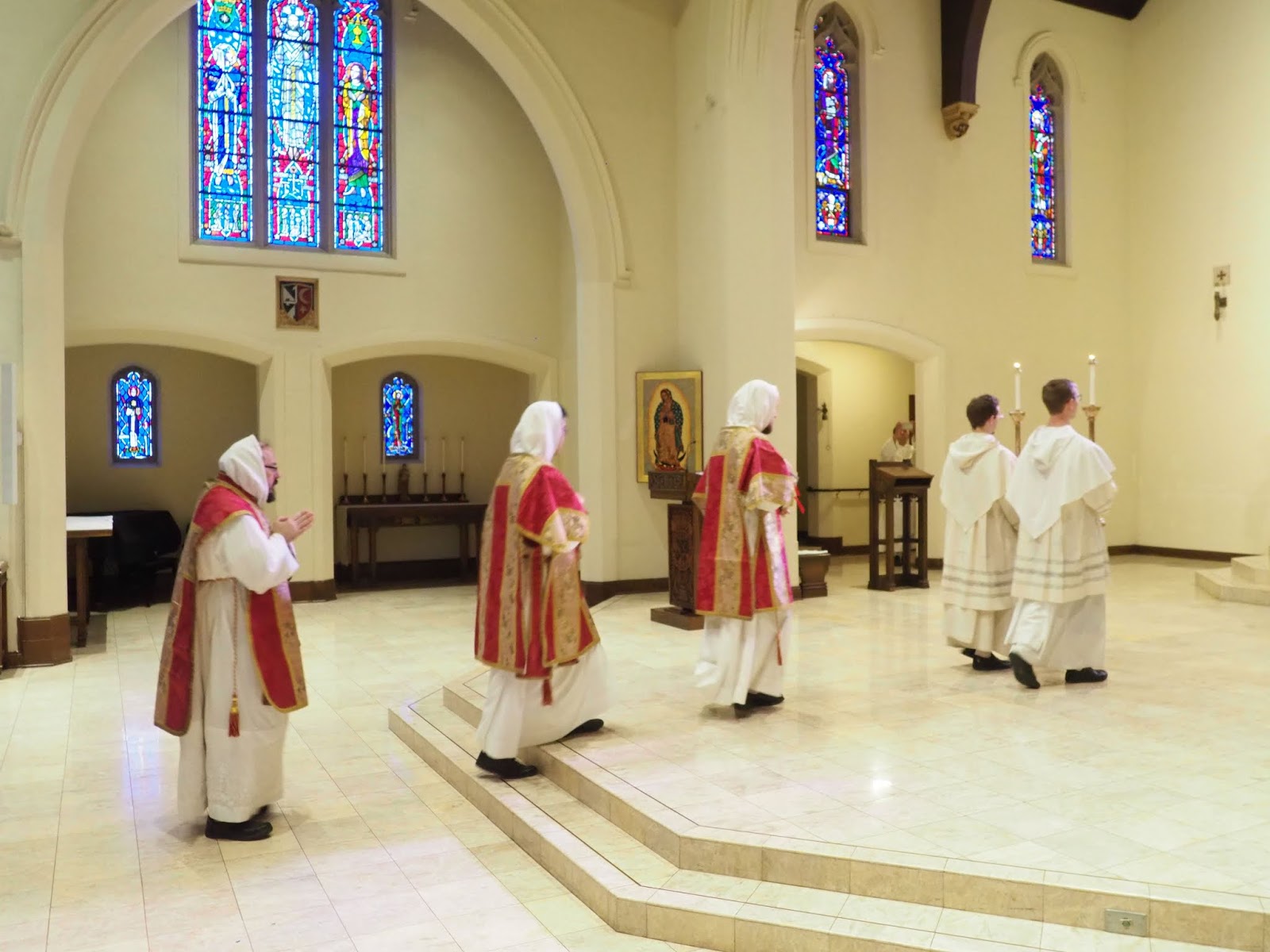
At Camberwell, Victoria, Australia, the Dominican Friars of the Province of the Assumption of the Blessed Virgin Mary have just celebrated the Dominican Rite for the first time since the Dominican Rite was abandoned in favor of the Roman Ordinary Form by the Order.

This Solemn High Mass, fittingly, was the Mass of St. Thomas Aquinas on his traditional feast day of March 7th, January 28th being the old feast of the translation of his relics, now the universal feast, so that his feast would fall outside of Lent in the Ordinary Form.

The celebrant was Fr. Thomas Azzi, OP, assisted by Fr. Christopher Dowd, OP as deacon, and Fr. Robert Krishna, OP as subdeacon.

The Dominican Church at Monash University

The altar is prepared

The ministers process toward the entrance

The procession arrives at the altar

Officium and Kyrie

The subdeacon prepares to bring the sacred vessels

The subdeacon pours the wine and water, after asking for the priest's blessing ("Benedicite")

Fr. Azzi, OP, preaching on the Universal Doctor

Incensing the altar

Incensing the ministers

Sanctus candles are lit

The priest blesses the host right before Consecration at the word "benedixit"
Elevation of the Host

Elevation of the Chalice

Unde et memores

The deacon offers the Pax to be kissed.

Absolution at Second Confiteor.

Purification of Vessels is finished

Postcommunion Prayer

Final blessing

An excellent turnout!
We thank Mr. Nicholas Morlin for sharing these pictures with us.

Wednesday, February 5, 2020

Photo Post: Dominican Rite Solemn Mass, Oakland CA, 2/1/20

I am pleased to present a series of photographs of the Dominican Rite Solemn Mass of St. Ignatius of Antioch celebrated at Saint Albert the Great Priory in Oakland CA on his traditional feastday, February 1. The celebrant of this Mass was Fr. Vincent Kelber, O.P., Director of the St. Jude Shrine at St. Dominic's Church in San Francisco.  The ministers, choir, and servers were all students of the Western Dominican Province: deacon, Br. Gregory Liu, O.P.; subdeacon, Br, Matthew Heynen; senior acolyte, Br. John Peter Anderson, junior acolyte, Br. Columban Mary Hall; thurifer, Br. Pawel Jamroz.  The organist was Fr. James Moore, O.P.

As St. Ignatius is a third-class feast, the cross was not carried at the Gospel, and the Creed was not sung (it is only sung on third-class feasts of Apostles and the Blessed Virgin in the Dominican Rite).


The minsters approach the altar

Prayers at the Foot of the Altar

The deacon opens the corporal

The subdeacon sings the Epitsle


The celebrant reads the intervening chants at the sedilla


The subdeacon washes his hands before preparing the chalice (during the Gradual)


The deacon sings the Gospel


The ministers swing back after reading the Offertorium


The celebrant prepares to incense the gifts

The ministers are incensed during the Preface

The beginning of the Sanctus


The acolytes light the Sanctus Candles


The Elevation


The ministers recite the Agnus Dei


The Absolution at the Communion Confiteor


Communion of the Faithful


The ministers swing back after reading the Communion Verse


The Dominus Vobiscum before the Ite Missa Est


The Blessing


The genuflction during the Last Gospel
I thank Br. Scott Norgaard for these photographs.

Monday, November 25, 2019

Bp. Augustine Di Noia's Sermons


I am pleased to announce that seventy of Bp. Augustine Di Noia's sermons have been published by Cluny Publications under the title of Grace in Season.


They can be ordered here.

Saturday, October 26, 2019

Dominican Rite in the "Last Frontier"

Our friars in Alaska routinely travel from their home base in Anchorage to help out with Masses throughout the state in the Ordinary Form, but once a month they also offer a Dominican Rite Mass in Fairbanks, at the historic Immaculate Conception Parish.

The Diocese of Fairbanks is rich in territory size, but scarce in vocations, having only one bishop two priests, and a handful of deacons to call their own.  To fill the gaps, outside priests are invited to help out either long-term or short-term. 

Outside visitors and tourists are often surprised to encounter the beauty, not just of Nature and the Northern Lights, but that of a Missa Cantata here, in what is perhaps the most northernmost Dominican Rite Mass regularly offered.

Tuesday, October 8, 2019

October is also Respect Life month in the States, and so our friars in Anchorage, Alaska thought it proper to do a votive Low Mass of St. Gerard Majella, complete with veneration of his relic, October 16, 2019, at 7 PM.

St Gerard, a Redemptorist, not a Dominican, happened to leave behind his handkerchief one day at a friend's family's house.  One of the daughters came after him to return it, but he told her to keep it, as it may come in handy one day.

When she later went into a troubled delivery with his unborn child, she remembered his words, and asked for the handkerchief to be brought to her.  On applying the handkerchief to her stomach, her pain disappeared, and she safely delivered a healthy child.  He is a patron for unborn children, pregnant women, young children, those falsely accused, and for making a good confession.

Thursday, October 3, 2019

Daily Dominican Rite Mass - Portland, Oregon

We are pleased to announce that our friars in Portland, Oregon, have recently begun to publicly offer the Dominican Rite Mass daily, Monday-Saturday, at 6 AM.

This is a Low Mass, added to the regular Sunday 11 AM Solemn High or Missa Cantata.

Thursday, July 11, 2019

New Dominican Propers for the Liturgy of the Hours

Title Page of the New Collectarium
I recently published a summary of the changes in the Dominican Calendar for Mass and Office that will come into effect on the First Sunday of Advent 2019. At that time, I promised that Dominican Liturgy Publications would be producing new editions of the books we have published for use at the Liturgy of the Hours by those taking various roles in choir.

The first and most important is Propers of the Office for the Order of Preachers, which contains the full propers for all Dominican saints and blesseds on our general calendar. This book would be used by the cantors, lectors, and, if desired by the hebdomadarian, that is, the friar leading prayers that week. This book has been updated to include the two new feasts, that of Bl. Pier Giorgio Frassati and of Bl. Bonaventure García Paredes and Companions, Martyrs of the Spanish Civil War. Those feasts with changed ranks or dates now reflect that. The propers are also available in pocket-book size.

Feasts that have been dropped from the Dominican General Calendar have been removed and included in Dominican Blesseds Celebrated Locally, a companion volume that has the short biographies and collects for the many Dominican saints and blesseds who are only celebrated in particular provinces. None of these are celebrated in the provinces of the United States, but many use this volume devotionally. The entire propers of those saints previously in the Propers of the Office for the Order of Preachers are now represented in this volume. It also includes the full propers for St. Bartholomew of the Martyrs, O.P., who was just canonized by Pope Francis on July 5.

Finally I am pleased to announce that we have also produced a new edition of our Collectarium: A Manual for Hebdomadarians, which contains all the texts, in particular the collects, needed by the bedomadarian, not only for Dominican saints, but for every day of the year. Included in this volume are the collects for saints recently added to the Roman Calendar (Saints John XXIII, Paul V, and John Paul II), as well as one blessed, Francis Xavier Seelos, added to the Calendar of the United States. This volume also has the particular feasts celebrated in the Western Dominican Province, but this does not prevent its use by other provinces.

Tuesday, July 2, 2019

Revision of the Modern Dominican Calendar

I believe most friars have already received a direct mailing of the new Calendarium Ordinis Praedicatorum, approved by the Congregation for Divine Worship on 14 April 2019 and promulgated by the master of the Order Bruno Cadore on 24 June 2019. I have made this these documents available for download here for nuns, sisters, Dominican laity, and any others who wish to celebrate Dominican saints with the new Roman Missal and the Liturgy of the Hours.  Note that those wishing to celebrate those feasts reduced to optional memorials may still do so--they are optional.

The format of this document makes it difficult to identify the changes promulgated.  So I will summarize them.  The list of Dominican feasts is not much changed but there are a good number of changes by which previous obligatory memorials have become optional, and there are some changes in the dates of celebration.  Here is a summary:

Change from obligatory to optional memorial:

4 January:         St. Zdislava Berkiana  (28 November in the U.S.)
18 January:       St. Margaret of Hungary
4 February:       St. Catherine de’ Ricci
10 May:            St. Antoninus of Florence
19 May:            St. Francis Coll Guitart
9 July:              St. John of Cologne and Companions
18 September:  St. Juan Macías
28 September:  Sts. Dominic Ibáñez de Erquicia, James Kyushei Tomanaga, Laurence Ruiz,
                                 and Companions
9 October:        St. Louis Bertrand (obligatory memorial in Western Province as secondary patron)

 Change from obligatory to optional memorial with new date:

15 January:      Sts. Francis de Capillas, Peter Sans, and Companions--move to 9 July
6 November:    Bls. Alphonsus Navarrete and Companions--move to 28 September

New optional memorials:

4 July:              Bl. Pier Giorgio Fassati
6 November:    Bls. Bonaventure Garcia Paredes, Hyacinth Serrano Lopez and Companions

Remove from the Dominican General Calendar:

23 January:      Bl. Henry Suso
12 February:    Bl. Reginald of Orleans
28 April:          St. Louis de Montfort (still an optional memorial on the Roman Calendar)
21 May:           Bl. Hyacinth-Marie Cormier
10 June:           Bl. John Domnici
17 July:            Bl. Ceslaus of Poland

The Order also published a revision of the list of Dominican saints and blesseds that are optional memorials, but only in the provinces where they lived. The four blesseds rmoved from the general calendar just listed are now approved for local use as below. Note that none of these optional local blesseds (of which there are many others) are celebrated in the United States. Three of these additonis include saints, not blesseds.  Here are those changes:

Add to local calendars:

23 January:      Bl. Henry Suso (Germany; Austria=Bavaria)
12 February:    Bl. Reginald of Orleans (France)
1 April:            Bl. Joseph Girotti (Italy--St. Dominic; Austria-Bavaria)
8 May:             Bl. Peter Claverie and Companions (France)
16 May:           Bl. Valdimir Ghika (Vicariate of Eastern Europe)
21 May:           Bl. Hyacinth-Marie Cormier (Italy--Roman)
10 June:           Bl. John Domnici (Italy--Roman)
17 July:            Bl. Ceslaus of Poland (Poland)
18 July:            St. Bartholomew of the Martyrs (Portugal)
13 August:       St. Alexander Longo and Companions (Italy--St. Thomas Aquinas)
7 September:   Bl. John-Joseph Lataste (France)
9 December:    St. Narcisa of Jesus Martillo y Morán (Peru)

A good number of local blesseds have been combined or moved, but I leave it to readers to check for this on the downloadable new calendar.


 Note that these changes become effective on the First Sunday of Advent, 2019 and that for those celebrating the Dominican Mass and Office of 1962 under the provisions of Summorum Pontificum and Universae Ecclesiae the only changes implied by this would be for those who want also to celebrate Dominicans canonized or beatified after 1962. When I publish the Dominican Rite Calendar for 2020, I will include these changes.

Thursday, June 20, 2019

Poetic Translation of the Medieval Elevation Prayer

I was pleased to receive this morning a poetic rendition of the Elevation Prayer, which I posted in the previous post, here on Dominican Liturgy on the occasion of Corpus Christi.  It is the work of Mr. Anthony M. J. L. Delarue, who happens to be a knight in obedience of the Sovereign Military Order of Malta. 

At the elevation of the Body of Christi.

All Hail, O holy flesh of God,
Who save our souls from guilt and shame;
While hanging on the mystic Rood
Thy sinful servants did reclaim.

Thou pourest forth the cleansing wave,
From stain of sin our souls to free,
Which Adam’s sin did first enslave,
With stolen apple from the tree.

Thou cleansest me with holy flesh,
Of roseate blood a kindly wave
From all life’s filth doth me refresh,
And save my soul beyond the grave.

By Thy benign and kindly grace
Grant me a true and mystic health,
And by Thy gentle holy peace,
To soul and flesh eternal wealth.

Thrust down to earth mine enemy,
And bring to nought his worldly pride,
And let us thence companions be,
The King of Angels as our guide.

O haven of salvation, Thou,
Who as my life hands back its lease,
O Mighty God, do me release
From lion’s roar and dragon’s fire;
Grant me a seat amidst the choir
Of those who righteous paths have trod,
Through endless ages without end,
Who live and reign, forever God. Amen.

Tastes may differ but I do believe that Mr. Delarue's choice of the ABAB rhyme scheme works better in English than the AABB scheme of the original. 

Wednesday, June 19, 2019

An Elevation Prayer for Corpus Christi

A couple of years ago, a couple who are my friends gave me a lovely gift, a page of a thirteenth-century devotional manuscript. I would paleographically date it to the late 1220s or early 1230s, and assign it to the Paris book trade. My friend's wife, a professional art historian, agreed with the date and place, noting the "spiky ivy" on the first page, which is typically mid-thirteen-century French. It was obviously made for a very wealthy patron, as is shown by the large margins, pen-scrolls, and gold leaf. That the patron was lay is obvious from the devotional use (at the elevation at Mass) and the easily memorized rhyming verses.  Versions of this prayer appear in twelfth-century English manusrripts, so it may originally be English.

As this is an elevation prayer, and it seems very suitable to make it available on Corpus Christi, whether it is celebrated tomorrow on Thursday or on Sunday, as is the case in many places.

Here us my transcription of the prayer along with the original on the right:


In elevatione corporis Christi.


Salve, sancta caro Dei,
per quem salvi fiunt rei;
servos tuos redemísti,
dum in cruce pependísti

Unda que de te manavit,
a peccato nos mundavit,
qui patravit primus homo,
inobediens de pomo.

Sancta caro tu me munda,
sanguinis benigne unda
lava me ab omni sorde,
et ab infernali morte.

Per tuam benignitatem,
presta michi sanitatem,
et per tuam sanctam pacem,
da michi prosperitatem.

Frange meos inimicos,
et fac eos mi amicos.
et superbiam eorum
destrue rex angelorum.

Tu qui es salútis portus,
in exitu mee mortis
líbera me, Deus fortis,
a leone rugiente
et a dracone furiente;
da michi sedem justorum,
qui vivis et regnas Deus
per omnia sec’la seculorum.
    Amen.


And here is a very inelegant translation of the prayer:

 At the elevation of the Body of Christi.

Hail, holy flesh of God,
through which the guilty are saved;
you redeemed your servants
while you hung on the cross.

The wave that flowed from you
cleansed us from that sin,
which the first man finished,
disobeying with the apple.

You, Holy Flesh, cleanse me,
kindly, with a wave of blood,
wash me from all stain
and from eternal death.

Through your kindness,
grant me healing,
and through your holy peace,
grant me good fortune.

Humble my enemies
and make them my friends,
and their pride,
let the King of Angels destroy.

You, who are the harbor of salvation,
at the time of my death
free me, Mighty God,
from the roaring lion
and the furious dragon;
give me a seat among the just,
you who live and reign
through all the ages of ages.
    Amen.

I have not tried to render the English translation into rhyming "long-meter," but I urge our readers to give it a try.

A joyful feast day to you all!